
Frumil
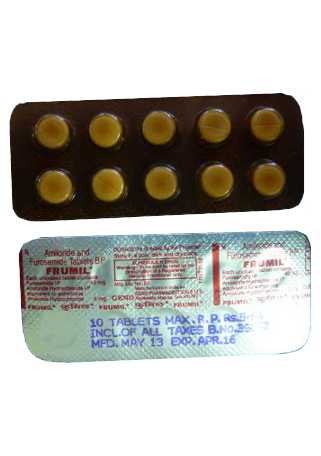
Frumil
- In our pharmacy, you can buy Frumil without a prescription, with delivery available throughout Canada (English). Discreet and anonymous packaging.
- Frumil is used for the treatment of edema associated with heart failure and other conditions. The drug combines furosemide, a loop diuretic, with amiloride, a potassium-sparing diuretic.
- The usual dose of Frumil is 1 tablet (40 mg furosemide/5 mg amiloride) in the morning, which may be adjusted to 2 tablets/day if needed.
- The form of administration is a tablet that is scored for easy splitting.
- The effect of the medication typically begins within 1 hour.
- The duration of action is approximately 6–8 hours.
- Alcohol consumption is not advised while taking Frumil.
- The most common side effect is increased urination.
- Would you like to try Frumil without a prescription?






Basic Frumil Information
- INN (International Nonproprietary Name)
- Brand names available in Canada
- ATC Code
- Forms & dosages (e.g., tablets, injections, creams)
- Manufacturers in Canada
- Registration status in Canada
- OTC / Rx classification
Critical Warnings & Restrictions In Canada
Health Canada closely regulates the use of medications, including Frumil, to ensure patient safety. Before using Frumil, it's essential to consult healthcare professionals. They can provide guidance tailored to individual health conditions and needs.
Specific groups, such as the elderly, pregnant women, and Indigenous patients, may experience heightened risks. Here's what to consider:
High-Risk Groups (Elderly, Pregnant, Indigenous Health Considerations)
Elderly patients often have increased sensitivity to medications and may present with various comorbidities. This makes them more susceptible to side effects associated with Frumil.
For pregnant women, weighing potential risks against benefits is vital. A healthcare provider's input is indispensable in navigating these considerations.
Interaction With Activities (Driving, Machinery, Workplace Safety Under Canadian Law)
Frumil can affect alertness and coordination, increasing the risk of dizziness. This can be particularly concerning when engaging in activities requiring full concentration, such as driving or operating machinery. Under Canadian law, individuals medicated with Frumil must adhere to legal obligations regarding these operations.
Q&A — “Can I Drive After Taking It In Canada?”
It's advisable to avoid driving for at least 24 hours after taking Frumil, especially if side effects like dizziness are experienced. Always err on the side of caution and consult with healthcare professionals about resuming such activities.
Mechanism & Pharmacology
Understanding how Frumil works in the body helps clarify its role in managing health conditions. This combination medication contains Furosemide and Amiloride, which synergistically promote the reduction of excess fluid in the body.
Simplified explanation (patient-friendly)
Frumil acts primarily as a diuretic, meaning it helps the body get rid of extra fluid through urine. Here's a simple breakdown:
- Furosemide: This component triggers the kidneys to eliminate sodium and water, making it effective for conditions like heart failure, where fluid retention occurs.
- Amiloride: It’s a potassium-sparing diuretic, which prevents the loss of potassium, balancing electrolytes in the body and reducing the risk of hypokalemia.
Together, these ingredients provide an effective way to manage fluid levels without causing significant potassium depletion.
Clinical terms (Health Canada approved monograph references)
Furosemide functions by inhibiting sodium reabsorption in the loop of Henle within the nephron, thereby increasing urinary output and decreasing extracellular fluid volume. Its pharmacodynamics also contribute to lowering blood pressure indirectly.
Amiloride’s mechanism is centered on blocking epithelial sodium channels in the distal nephron, acting to retain potassium while promoting natriuresis. Notably, potential side effects include hyponatremia, hyperkalemia, and dehydration, warranting careful monitoring in clinical settings.
Indications & Off-Label Uses in Canada
Frumil is prescribed for various medical conditions, particularly those characterized by fluid overload.
Approved indications (DIN)
According to Health Canada guidelines, Frumil is commonly indicated for:
- Congestive heart failure
- Chronic renal failure
- Cirrhosis with ascites
These conditions often lead to excessive fluid retention, making Frumil a vital part of treatment plans.
Common off-label practices (Canadian physicians)
Besides official indications, Canadian physicians frequently prescribe Frumil off-label for conditions like:
- Hypertension management
- Peripheral edema in various disorders
These off-label uses have shown positive outcomes in many patients; however, they require careful management to prevent adverse effects.
Key Clinical Findings
Recent research has expanded understanding of Frumil's efficiency and safety profile.
Canadian and international studies 2022–2025
Numerous studies conducted in Canada and internationally have highlighted Frumil's efficacy in reducing symptoms related to fluid retention. For example, recent trials noted significant improvements in heart failure patients, with reduced hospital readmission rates.
Ongoing Health Canada safety monitoring
Health Canada maintains rigorous monitoring processes for Frumil, ensuring ongoing patient safety. This includes evaluating reported side effects and adjusting guidelines based on new evidence.
Alternatives Matrix
For those seeking options outside of Frumil, several alternatives exist.
Comparable medicines with DIN in Canada
Medications comparable to Frumil include:
- Moduretic (amiloride + hydrochlorothiazide)
- Aldactazide (spironolactone + hydrochlorothiazide)
These alternatives may provide similar benefits depending on the specific needs of the patient.
Pros and cons checklist
When considering Frumil versus its alternatives, it's essential to review the advantages and disadvantages:
- Pros: Effective fluid reduction, potassium-sparing properties, covered by most drug plans.
- Cons: Possible electrolyte imbalances, monitoring required for kidney function.
Common Questions from Canadian Patients
Patients often have specific queries regarding Frumil’s use and effects:
- What are the potential side effects of Frumil?
- Is Frumil safe during pregnancy?
- How long does it take to observe effects?
The answers can significantly ease concerns and facilitate informed discussions with healthcare providers.
Suggested Visual Content
Visual aids can enhance understanding for patients regarding Frumil consumption and coverage.
Infographics on provincial drug plan coverage
Creating infographics that illustrate how Frumil is covered under various provincial drug plans can clarify coverage options for patients.
Canadian pharmacy purchase flowcharts
Flowcharts demonstrating the purchase process for Frumil in pharmacies can simplify the experience, making it more accessible for patients.
Registration & Regulation
Understanding the regulatory landscape is crucial for anyone involved in the Canadian healthcare system. Drug registration ensures that medications like Frumil meet safety and efficacy standards before they reach patients. This process is governed by Health Canada, which plays a central role in the protection of public health.
Health Canada approval
Health Canada's drug approval process involves multiple stages. Initially, pharmaceutical companies submit an application for a new drug, which includes comprehensive data on clinical trials, drug efficacy, and safety assessments. After a review period, Health Canada assesses whether the benefits of the medication outweigh the risks. The process typically includes the following steps:
- Submission of clinical trial data.
- Expert evaluation of the drug's safety and effectiveness.
- Approval decision based on rigorous standards.
Once approved, the medication is available for prescriptions; continuous monitoring ensures ongoing safety through reporting and assessments of adverse effects.
DIN number and labelling requirements
The Drug Identification Number (DIN) is a vital part of the drug registration process in Canada. This unique identifier is assigned to each medication, ensuring proper tracking and accountability. A DIN is essential for:
- Ensuring patient safety by tracking adverse reactions.
- Providing easy access to medication information.
Moreover, accurate labelling is equally important. Labelling contains critical information about dosing, contraindications, and potential side effects, facilitating proper medication use.
Storage & Handling
Storing and handling Frumil correctly is essential to maintain its efficacy. Medicinal products, including Frumil, need to be treated with care to ensure they remain safe for patients.
Standard Canadian household conditions
Optimal storage settings for medications require keeping them in a cool, dry place. Frumil should be stored below 25°C (77°F), away from moisture and light. Here are some key tips:
- Use original packaging to protect from light and air exposure.
- Avoid bathrooms for storage; temperature and humidity fluctuate.
- Keep out of reach of children to prevent accidental ingestion.
Following these guidelines can help maintain medication effectiveness until the expiration date.
Cold-chain requirements (where applicable)
Some medications may necessitate cold storage, especially those sensitive to temperature fluctuations. While Frumil itself is stable at room temperature, other drugs often require refrigeration. Monitoring can include:
- Using temperature loggers to maintain a consistent environment.
- Regular checks to ensure cold storage remains within safe limits.
Always verify storage requirements for each medication to ensure optimal effectiveness.
Guidelines for Proper Use
Effective use of medications like Frumil is paramount for patient safety and treatment efficacy. Guidance from reliable professionals ensures that patients receive accurate information on how to use their prescribed medications.
Canadian pharmacist guidance
Pharmacists provide vital recommendations on the use of Frumil. Key points they often discuss include:
- Adhering to prescribed dosages to avoid side effects.
- Awareness of potential interactions with other medications.
- Understanding the importance of reporting any adverse reactions immediately.
This supportive environment helps patients feel confident in their treatment plan.
Provincial health authority recommendations
Various provincial health authorities offer guidelines tailored to local practices. These may include:
- Restrictions for certain populations, such as the elderly or those with renal impairment.
- Advice on combining Frumil with lifestyle changes for enhanced outcomes.
Staying updated with local health authority guidelines ensures patient safety and optimal medication usage.
Delivery Information Table
| City | Region | Delivery time |
|---|---|---|
| Toronto | Ontario | 5–7 days |
| Vancouver | British Columbia | 5–7 days |
| Montreal | Quebec | 5–7 days |
| Calgary | Alberta | 5–7 days |
| Edmonton | Alberta | 5–7 days |
| Ottawa | Ontario | 5–7 days |
| Winnipeg | Manitoba | 5–7 days |
| Quebec City | Quebec | 5–7 days |
| Halifax | Nova Scotia | 5–9 days |
| Victoria | British Columbia | 5–9 days |
| St. John's | Newfoundland and Labrador | 5–9 days |
| Regina | Saskatchewan | 5–9 days |
| Charlottetown | Prince Edward Island | 5–9 days |
| Yellowknife | Northwest Territories | 5–9 days |